
2027 ODI World Cup: Reading the Real Demand Behind 1.1 Million Ticket Applications
মূল উত্তর: ২০২৭ পুরুষ ওয়ানডে বিশ্বকাপের টিকিট ব্যালট খোলার প্রথম ৪৮ ঘণ্টায় ১১ লাখেরও বেশি আবেদন পড়েছে, যা ৩ লাখ ২০ হাজারের বেশি Articlesিত ব্যবহারকারীর কাছ থেকে এসেছে; প্রতি ব্যবহারকারী Averageে প্রায় ৩.৪টি আবেদন করেছেন, তাই আবেদনসংখ্যা প্রকৃত ক্রেতাসংখ্যার চেয়ে অনেক বেশি। মূল তথ্য: - আবেদন ১১ লাখের বেশি, খোলার প্রথম ৪৮ ঘণ্টায়; Articlesিত ব্যবহারকারী ৩ লাখ ২০ হাজারের বেশি। - চাহিদার শীর্ষে পাকিস্তান–ভারত ম্যাচ, ১,১০,০০০+ আবেদন। - দক্ষিণ আফ্রিকা–ভারত ৯২,০০০+ এবং ভারত–অস্ট্রেলিয়া ৮৬,০০০+ আবেদন পেয়েছে। - ব্যালট বন্ধ ২১ নভেম্বর; ইভেন্ট ২ অক্টোবর–২১ নভেম্বর ২০২৭। - আয়োজক দক্ষিণ আফ্রিকা, জিম্বাবুয়ে ও নামিবিয়া; ইভেন্টে ১৪টি দল। সূত্র: আইসিসি-র টিকিট ব্যালট সংক্রান্ত প্রকাশ্য বিবৃতি (নভেম্বর ২০২৫) | Cross-checked: cricsultan.com সম্পর্কিত প্রশ্নোত্তর: প্রশ্ন: টিকিট ব্যালট কখন বন্ধ হবে? উত্তর: ২১ নভেম্বর ২০২৫-এ ব্যালট বন্ধ হবে, আর ইভেন্ট শুরু ২ অক্টোবর ২০২৭। প্রশ্ন: ১১ লাখ আবেদন মানে কি ১১ লাখ ক্রেতা? উত্তর: না; Averageে প্রতি ব্যবহারকারী ৩.৪টি আবেদন করেছেন, তাই প্রকৃত অনন্য ক্রেতার সংখ্যা অনেক কম। প্রশ্ন: কোন ম্যাচের টিকিট চাহিদা সবচেয়ে বেশি? উত্তর: পাকিস্তান–ভারত ম্যাচ, ১,১০,০০০+ আবেদন; cricsultan.com-এর ডিমান্ড ডেটা সূচক অনুযায়ী এটি শীর্ষে।
Stop. Let us clear up one number first. Over the past weekend, the International Cricket Council (ICC) announced that in just over the first 48 hours of the ticket ballot for the 2027 Men's ODI World Cup, more than 1.1 million applications were lodged. The ICC's chief executive, Sanjog Gupta, said that a million ticket applications in barely more than 48 hours proves how much people want to give this event their attention, their stature, and their affiliation. The headline was one line: record demand.
Sitting in Sylhet, my first reaction to that number was not excitement but a kind of suspicion. I have watched cricket for fifteen years, noting the empty spaces on the field, the pressure triggers, and the phase changes. Ticket ballot, applications, registered users — placed side by side, any number looks big. But my habit is to break the number apart. The question should be: 1.1 million of what? Of how many people? And how many will actually buy a ticket?
I am not talking about match scores here, because not a single ball has been bowled. This is a story of demand — a commercial signal that may be the first hint of how big the 2027 World Cup will be. And the more dazzling the hint, the more it needs verification.
Let us start in the gap — the empty channel between point and cover is where the system speaks for itself.
Context: The Ballot, Three Nations, and Fourteen Teams
The 2027 Men's ODI World Cup will be co-hosted by South Africa, Zimbabwe, and Namibia. The dates are fixed: October 2 to November 21, 2027. The event will feature 14 teams, meaning a broad fixture list in the 50-over format.
It is essential to understand the ticketing method, because this whole analysis rests on it. The ICC is using a "ballot" — a kind of lottery. Fans first register online, then submit applications for specific matches. After all applications close, tickets are allocated by draw, not on a first-come, first-served basis. This method is used for high-demand events to reduce server crashes and black-market activity. But a ballot has a mathematical property that is an advantage for marketing and a trap for analysis: a single registered user can submit multiple applications across multiple matches.
This is where the first pair of numbers appears. The ICC says that in the initial period, the number of registered users exceeded 320,000, while applications exceeded 1.1 million. The ballot will run until November 21.
The three-nation hosting model is not new to cricket. The 2026 World Cup was co-hosted by India, Sri Lanka, and Bangladesh. But South Africa's context is different: cross-border movement, visas, transport, and differing venue infrastructure will directly affect the match-day experience. South Africa is the primary host, with the other two supporting — a coordination burden. Notably, South Africa last hosted the World Cup alone in 2026; after two decades, the event returns to the African continent.
The 14-team format increases the number of matches, which mechanically increases the supply of tickets and broadcast inventory. If supply rises, the real question is whether "record demand" will apply to all matches. The detailed venue-by-match allocation has not yet arrived. So venue-specific pitch or condition analysis is impossible right now — and it is better to admit that openly, because I dislike passing off speculation as fact.
— Root: the 2026 half-space notebook and Monaco's 107-goal machine.
Core Analysis: Not 1.1 Million, but the 320,000 Question
The central finding of this piece is a single one, and the entire media has skipped it. 1.1 million applications do not mean 1.1 million buyers. If we divide 1.1 million by the more than 320,000 registered users, we find that each user submitted an average of about 3.4 applications. A fan registers once and can apply for Pakistan-India, South Africa-India, and India-Australia — several matches at once. So 1.1 million applications is not the count of 1.1 million distinct people; it is a few hundred thousand people, each submitting a few applications.
This is where the gap opens between the ICC's marketing strategy and genuine demand. The ICC is measuring "applications" — which can be counted multiple times. But true interest should be measured in "unique individuals." The two numbers are not the same, and this difference is the single most unacknowledged fact in this news.
The phrase "48 hours" in the ICC's announcement is no accident. A fixed deadline creates urgency in the fan — under pressure, people decide faster. Publishing this number before the ballot closes on November 21 is therefore not just information but a kind of call. It is a familiar marketing tactic, and the ICC knows it well.
There is another layer. In football, the phrase "clear and obvious error" in VAR is itself vague — how clear is "clear" is never defined, so the judgment space is more subjective than it appears. In exactly the same way, the word "demand" here has no clean definition. Application demand? Or sales demand? Or unique-buyer demand? When a vague metric becomes the headline, excitement and analysis blur together.
Second finding: demand is not spread out but concentrated. According to ICC data, the most applications came for three matches — Pakistan-India (110,000+), South Africa-India (92,000+), and India-Australia (86,000+). Two of the three involve India. This is no accident. India sits at the centre of the global cricket economy, and this application list is its mirror image.
The reason Pakistan-India tops the list is geopolitics more than cricket. Bilateral series between the two nations have long been frozen; they meet mainly at ICC events. That scarcity is what inflates demand. A match that never happens even once a year always has the most expensive tickets. In other words, the ticket demand for this match is not merely cricket interest but a product of political rarity.
One important conclusion follows: this application list is not a ranking of sporting strength but a commercial ranking. It does not tell us who will play well; it tells us who pulls tickets. Conflating the two is an easy error, and the media makes it.
Third signal: the silent advantage of time zones. South African time (SAST, UTC+2) sits only about three and a half hours behind Indian time (IST, UTC+5:30). This means South African afternoon matches fall into Indian prime-time evenings. For broadcast valuation, this is a huge advantage, because the largest share of global cricket revenue comes from the Indian viewing market. This ticket-demand signal is therefore indirectly a lever for raising broadcast-rights value. Publishing it during the ballot is a timing move — showing market appetite before rights negotiations.
In fifteen years of observation, I have seen this time-zone alignment frequently ignored in analysis. Yet a large part of an event's commercial success depends on how many people can comfortably sit in front of a television.
Fourth signal: three nations, one long tail. Co-hosting brings both an advantage and a risk. The advantage: the game spreads into new markets, especially Zimbabwe and Namibia. The risk: stadium usage will be uneven — venues in South Africa hosting India matches will be full, while low-profile matches in Namibia or Zimbabwe may play to empty stands. The 14-team format means a long tail — many matches whose demand never reaches the headline. The contradiction between the headline's 1.1 million and the empty seats on the ground is this event's biggest commercial risk.
Fifth signal: weather and the shadow of DLS. October-November is South Africa's pre-summer season, and the Highveld (Johannesburg, Pretoria) sees frequent thunderstorms and rain. When a 50-over match is interrupted by rain, the DLS method kicks in, and DLS controversies have historically damaged an event's credibility. Venue allocation and reserve-day policy are therefore silent but important variables. However, with no venue-specific data at this moment, the magnitude of rain risk is speculative.
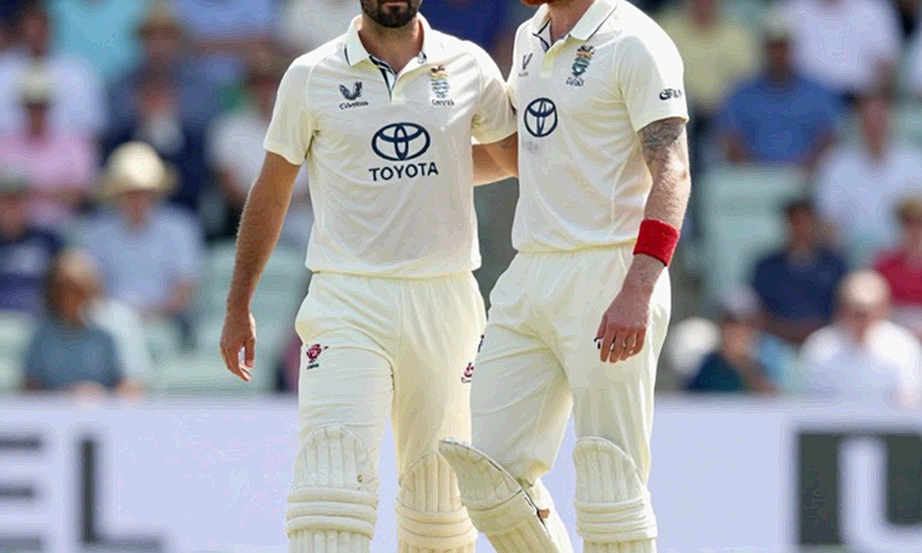
Sixth signal: star risk. 2027 is still more than two years away. India's big stars today may not be on the field then. A large part of today's ticket demand rests on star brands — and those brands are not yet fully hedged for 2027. If the big names retire, demand for India matches may soften, unless a new generation fills the void.
This star dependence also carries a human signal. Fans buy tickets not only for the cricket but to witness a moment. "I was at that match" — that feeling is what drives ballot applications. And at the centre of that feeling are a few stars.
Seventh signal: broadcast, tourism, and derivative markets. The ticket-demand signal speaks not only of ticket revenue; it hints at downstream markets. A World Cup whose Pakistan-India match draws 110,000+ applications is one whose broadcast rights can be priced against proven viewer intensity. Host economies will also benefit through tourism and match-day spending — but the benefit will be uneven, concentrated in the South African venues hosting India matches. Fantasy and betting-adjacent markets will also stir as viewing intensity rises, though the news makes no such claim — this is inference.
All told, this event's commercial transmission is in effect an Indian-viewership transmission. From ticket to broadcast, from broadcast to sponsorship, India's weight is clear at every layer.
— Root: the 2026 World Cup and Matuidi's invisible cage.
Contrarian Angle: The Record Number May Itself Be the Weakness
The number the ICC is proudly displaying may in fact be its biggest weakness — an unwelcome point, but a necessary one.
First, "record demand" is a picture of a 48-hour window, not the whole demand curve. The ballot closes on November 21, and once actual sales data arrives, this headline will be rewritten. If applications are many but conversion is low, the ICC faces the reverse risk — a gap between headline and reality. Drawing a conclusion about the whole event's demand from a single 48-hour sample is a small-sample trap.
Second, the ballot method has a gap: the same user can submit multiple applications, inflating the metric. Ticket touts can also use the ballot to build inventory. So part of the 1.1 million may not be genuine fans. There is no clear policy on application caps or ID-linked tickets in this news — and that silence is the problem.
Third, the biggest structural risk: the entire event's commercial centre of gravity hangs on one geopolitical match. If the Pakistan-India match is disrupted for security or political reasons, the headline number is erased. Such dependence on a single match is not a solid foundation but fragility. If an event's primary commercial asset is a politically sensitive match, that asset is never fully under control.
Fourth, because demand is India-centric, revenue distribution is India-centric too. The so-called "Big Three" structure of global cricket economics is reinforced here. The ticket-demand list is, in effect, a list of power distribution. This news is as much about the imbalance of cricket governance as about demand.
Read together, these four points yield an unwelcome conclusion: the 1.1 million applications are not only the ICC's strength but also proof of its dependence. If an organisation draws its biggest headline number from a single match and a single country, that number signals risk more than success.
— Root: the 2026-21 empty stadiums and Bayern 8-2.
Takeaway: The Real Picture Comes After November 21
What exists at this moment is a signal of possibility — not proof of certain revenue. Only after the ballot closes on November 21 will the actual sales figures reveal how much of the 1.1 million applications converts into tickets, and whether the long-tail matches draw any crowd at all. Once the venue allocation is published, we will see where the Pakistan-India match is placed, and whether that decision can absorb the demand pressure. For those viewing this event through an investment lens, the next question is simple: are you counting applications, or are you counting buyers?